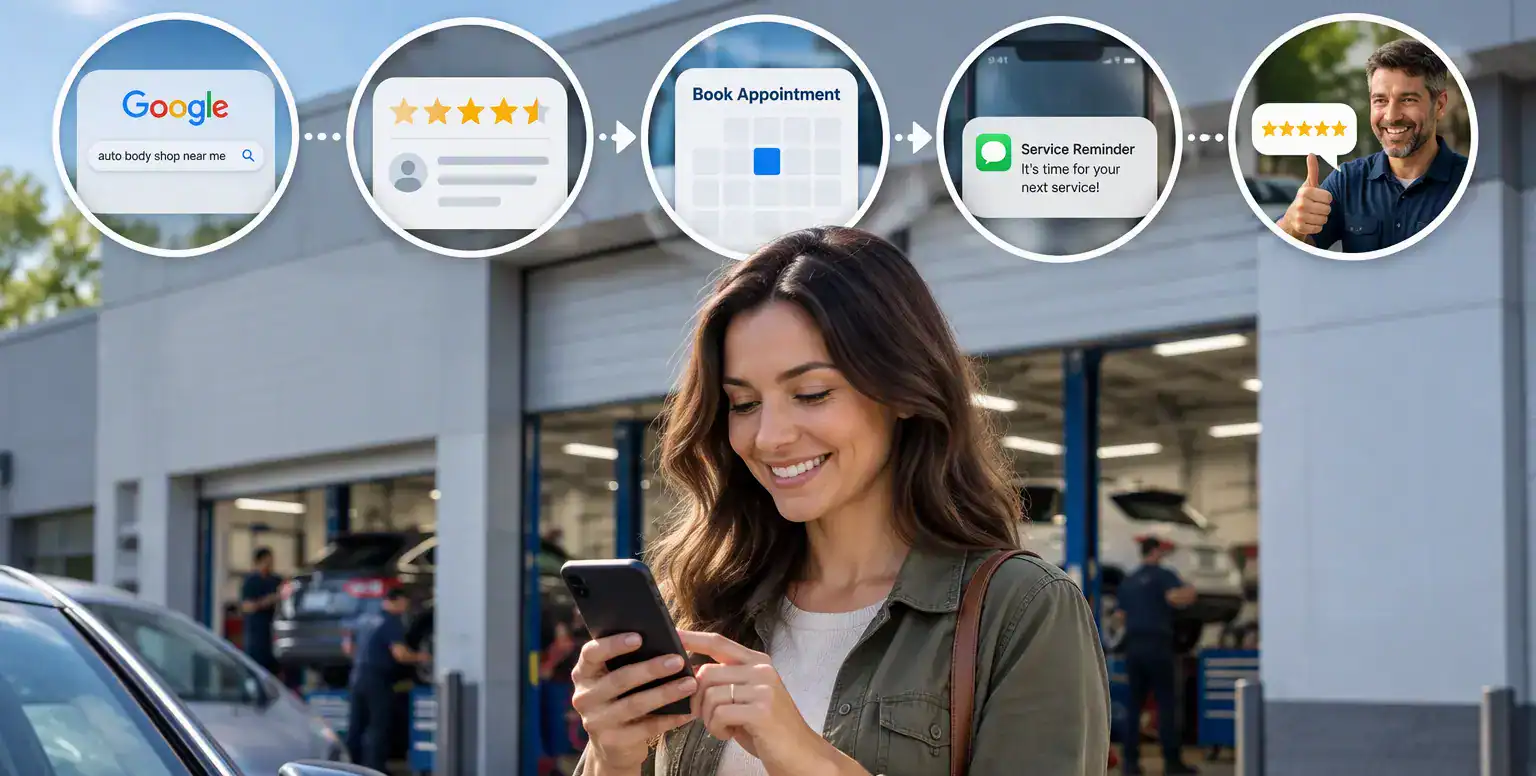
Many shop owners think of marketing as simply advertising. In reality, marketing is so much bigger than that.
It’s every action that helps a potential customer discover your business, trust your expertise, schedule an appointment, return for future service, and ultimately recommend you to others. That’s why the most successful repair and collision shops don’t just spend money on marketing. They understand how each marketing activity contributes to the customer journey.
Read on as we explore the fundamentals of the marketing funnel and discuss several practical tactics shop owners can implement immediately to improve visibility, reputation, and customer acquisition. The good news? Most of these ideas require little to no additional budget.
What’s the Marketing Funnel for Independent Repair Shops?
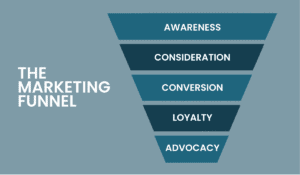
Every marketing effort in your shop should support one of five objectives:
- Awareness. This is how customers discover your shop. Examples include Google searches, local SEO, social media, community involvement, signage, and word-of-mouth referrals.
- Consideration. Once customers know you exist, they need to decide if they trust you. Reviews, your website, photos of your facility, certifications, and customer testimonials all influence this stage.
- Conversion. This is the moment a customer decides whether to schedule an appointment. The easier you make that process, the more vehicles you’ll book.
- Loyalty. Loyal customers return instead of shopping around. Follow-up communication and ongoing customer care play a major role here.
- Advocacy. When customers leave reviews and refer friends and family, your marketing begins working on its own. Advocacy is often the most powerful and cost-effective form of marketing available to independent shops.

Where Most Shops Are Losing Customers
As we work with shop owners across the country, three common weaknesses show up repeatedly.
1. They’re Invisible Online
Many websites look exactly like every other repair shop website.
Generic headlines such as “Welcome to ABC Auto Repair” don’t tell customers what makes the business unique. Worse yet, they don’t help Google understand what services the shop provides.
Potential customers should be able to answer three questions within seconds:
- What do you specialize in?
- Where are you located?
- Why should I choose you?
If your website can’t answer those questions quickly, you’re likely losing opportunities before customers ever call.
2. Their Reputation Doesn’t Match Their Quality
Some shops consistently deliver exceptional service but have fewer than 50 reviews online. Meanwhile, a nearby competitor with hundreds of reviews may appear more trustworthy simply because they have more visible customer feedback.
Today’s consumers often make decisions before speaking with anyone. Reviews have become one of the biggest factors influencing trust and consideration.
3. Scheduling Is Too Difficult
Many customers want convenience. If a prospective customer visits your website after business hours and can’t easily request an appointment, there’s a good chance they’ll continue searching elsewhere.
Every unnecessary step creates friction. Every bit of friction reduces conversions.

Five Marketing Improvements You Can Make This Month
The best marketing improvements are often the simplest ones. These five tactics can help increase visibility, build trust, and make it easier for customers to choose your shop.
1. Use AI to Create Better Repair Recommendations
Many service advisors and estimators have excellent technical knowledge, but struggle to explain repairs in language customers can easily understand. That’s where AI tools like ChatGPT can help.
By providing your notes, inspection findings, and repair recommendations, you can quickly generate a professional customer-facing explanation that:
- Restates the customer’s concern
- Explains what was found
- Describes the recommended repair in plain language
- Includes pricing information
- Invites questions and next steps
The goal isn’t to replace your expertise. It’s to communicate that expertise more effectively. When customers understand the value of a repair, they are far more likely to approve it.
2. Put Review QR Codes Everywhere
If you’re already handing customers an invoice, estimate, or repair order, you’re holding one of your best opportunities to generate reviews. Create a QR code that links directly to your Google review page and place it on:
- Invoices
- Thank-you cards
- Repair folders
- Vehicle pickup documents
- Counter displays
The fewer steps customers have to take, the more likely they are to leave feedback.
3. Automate Your Follow-Up Process
Many shops ask for reviews only when they remember. The most successful shops create systems. A simple follow-up email or text sent two to three days after vehicle pickup can:
- Ensure customers are satisfied
- Identify concerns before they become negative reviews
- Generate more online reviews
- Strengthen customer relationships
Even a basic automation using tools like Zapier or Google Sheets can ensure no customer falls through the cracks.
4. Fix Your Homepage Headline
One of the fastest SEO improvements you can make takes less than five minutes. Most shop websites feature headlines that say something like:
“Welcome to John’s Auto Service.”
That headline doesn’t help customers or search engines understand what you do.
Instead, include:
- Your specialty
- Your service type
- Your location
For example:
- European Auto Repair in Atlanta, Georgia
- Collision Repair Specialists Serving Dallas-Fort Worth
- Diesel Truck Service & Repair in Nashville, Tennessee
That simple adjustment immediately communicates what your shop does and who it serves.
5. Make Online Scheduling Impossible to Miss
Consumers increasingly expect businesses to offer online appointment requests. If your management system includes scheduling functionality, make sure customers can find it.
Add your scheduling link to:
- Your website header
- Your website footer
- Google Business Profile
- Facebook page
- Instagram bio
- Email signatures
- Text responses
- Voicemail messaging
Remember: marketing doesn’t end when a customer decides to book. It ends when they actually can.
Start Small, But Start Today
One of the biggest mistakes shop owners make is trying to fix everything at once. Instead, choose two improvements and commit to implementing them this month. ATI’s recommendation is to begin by evaluating your website headline, generating your Google review link, testing an AI-assisted estimate template, or enabling online appointment requests.
Marketing success rarely comes from a single campaign or flashy promotion. More often, it comes from consistently improving the fundamentals.
- Make it easier for customers to find you.
- Make it easier for them to trust you.
- Make it easier for them to schedule.
Do those three things well, and you’ll put your shop in a much stronger position to attract vehicles, retain customers, and generate more referrals.